
English

Home > Our News > Product Information > Success of PAM in Coal Mine Wastewater Sedimentation
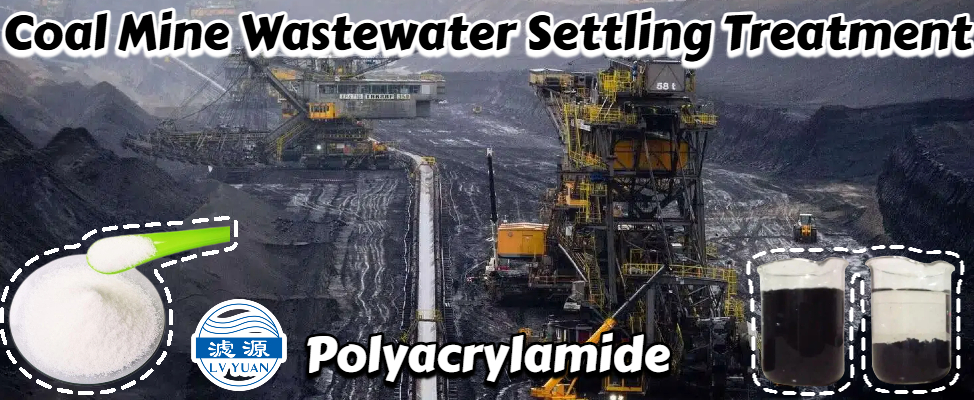
As a professional manufacturer of water treatment chemicals for 28 years, we have supplied Polyacrylamide (PAM) to hundreds of coal mines and coal washing plants. Coal mine wastewater contains high levels of suspended solids, ultrafine coal particles, and minerals, making sedimentation difficult without a proper flocculant.
To help users select the right PAM more easily, we prepared a complete guide covering wastewater characteristics, common issues, product selection, and real project performance.
PAM is a high-molecular polymer used to:
Aggregate fine coal particles
Increase sedimentation speed
Improve solid–liquid separation
Reduce turbidity
Clarify recycled water
In coal mine wastewater treatment, Anionic PAM is the most common and effective type.
Click the YouTube video link to learn about PAM.
High suspended solids (SS)
Ultrafine coal particles (<5 μm)
Clay and mineral impurities
Dark color and high turbidity
Extremely slow natural settling
High negative charge on coal particles
Turbid recycled water affecting coal washing performance
Sludge accumulation in sedimentation tanks
Therefore, PAM is essential for fast and effective sedimentation.
1. Water becomes more turbid after treatment?
Usually caused by incorrect PAM ion type or dosage.
2. Slow sedimentation?
Often due to low molecular weight PAM or high sludge concentration.
3. Weak or broken flocs?
High molecular weight PAM is needed, or mixing speed is too fast.
Condition 1: High turbidity & high coal content
Recommended: Anionic PAM, MW 12–16 million.
Condition 2: Very fine particles, difficult to settle
Recommended: High molecular weight anionic PAM, MW 15–19 million.
Condition 3: Used together with PAC or PFS
Recommended: Medium molecular weight PAM for better synergy.
Condition 4: Need very clear recycled water
Recommended: Ultra-high molecular weight PAM, MW 18–20 million.
→Click the link to read more articles about PAM.
Common Problems and Solutions with Polyacrylamide
What is the cationicity in cationic polyacrylamide?
Applications and Precautions of PAM in Sludge Dewatering
| Parameter | Before PAM | After Using PAM |
|---|---|---|
| Turbidity (NTU) | >3000 | 50–120 |
| SS (mg/L) | >800 | <100 |
| 5-min Sediment Ratio | 20% | <5% |
| Settling Speed | 5–10 cm/min | 25–40 cm/min |
Conclusion:
PAM improved settling speed by 4–6 times and significantly reduced turbidity.
Q1: What type of PAM is used for coal mine wastewater?
A1: Anionic PAM is the best choice for most coal slurry and washing wastewater.
Q2: What is the typical dosage?
A2: 1–5 ppm, but jar testing is recommended.
Q3: Can PAM work with PAC or PFS?
A3: Yes. PAC is added first, then PAM for best results.
Q4: Why are the flocs small?
A4: The PAM molecular weight may be too low.
Q5: Sedimentation is slow in winter – what to do?
A5: Use higher molecular weight PAM and slightly increase dosage.

Please contact us for free quotation by form below. We promise the quickest response within 24 hours: