
English

Home > Our News > Product Information > PAC vs BAC
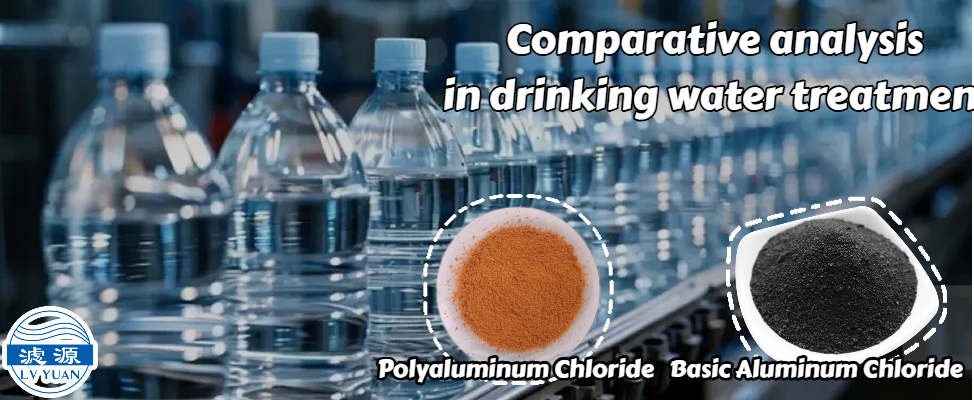
As a professional manufacturer with 28 years of experience supplying water treatment chemicals to more than 80 countries, we provide both PAC (Polymeric Aluminium Chloride) and BAC (Basic Aluminium Chloride) for drinking water plants, industrial users, and municipal systems.
Over the years, many customers have asked us:
“What are the real differences between PAC and BAC? Which one is better for drinking water? How do they perform in different wastewater conditions?”
This guide summarizes our real project experience and provides practical, easy-to-understand recommendations.
PAC is one of the most widely used coagulants worldwide, known for:
Al₂O₃ content: 26–30%
Fast coagulation and large floc formation
Strong adaptability to low-temperature and high-turbidity water
Excellent cost-performance ratio
PAC is ideal for most conventional drinking water and industrial wastewater applications.
BAC contains higher basicity and more Al(OH)ₙ structures, providing:
Denser and stronger flocs
Lower turbidity in treated water
10–25% lower dosage compared with PAC
Better compatibility with membrane and advanced filtration systems
BAC is commonly used for premium drinking water, bottled water, and food-grade processing water.
| Indicator | PAC | BAC |
|---|---|---|
| Al₂O₃ Content | 26–30% | 30–40% |
| Basicity | 30–90% | 60–85% |
| Dosage | Higher | Lower |
| Floc Strength | Medium | Stronger |
| Residual Aluminum | Low | Very low |
| Water Temperature Adaptability | Excellent | Good |
| Cost | Lower | Slightly higher |
In summary:
BAC offers cleaner water and lower residual aluminum, while PAC provides wider adaptability and better cost efficiency.
High-turbidity surface water
Seasonal water quality changes
Cold or low-turbidity raw water
Cost-sensitive drinking water projects
High-purity drinking water
Bottled water production
Ultrafiltration, ceramic membrane, or RO pretreatment
Food and pharmaceutical water systems
BAC consistently delivers clearer water and lower residual aluminum.
Food Processing Wastewater
PAC → Primary coagulation
BAC → Deep polishing
Paper Mill Wastewater
PAC → Cost-effective for large-volume treatment
BAC → Improves clarity for reuse
Chemical Wastewater
PAC → Broad applicability
BAC → For high-purity or difficult-to-treat wastewater
Mining & Metal Wastewater
PAC → Removes turbidity and metals
BAC → Ensures lower residual aluminum for high-end systems
High turbidity: Choose PAC
Ultra-low turbidity demand: Choose BAC
Cold temperature: PAC performs better
High-purity drinking water: BAC is the best option
Q1: Which product is better for drinking water?
A1: PAC is suitable for standard treatment; BAC is ideal for high-purity applications.
Q2: Why is BAC more expensive?
A2: Its higher basicity and stronger flocculation performance provide cleaner water and lower dosage.
Q3: How much lower is the BAC dosage?
A3: Approximately 10–25% lower than PAC.
Q4: Can PAC and BAC be combined?
A4: Yes, especially for complex wastewater. Our engineers can design the dosing ratio.
Q5: Which one works better in cold water?
A5: PAC.

Please contact us for free quotation by form below. We promise the quickest response within 24 hours: