
English

Home > Our News > Product Information > Polyacrylamide in Drilling Mud Treatment
In oil and gas drilling, drilling mud plays a vital role in maintaining wellbore stability and transporting cuttings. Polyacrylamide (PAM), a high-molecular-weight polymer, is one of the most effective additives for optimizing drilling fluid performance.
As a professional manufacturer with over 25 years of experience, we share data-driven insights and usage recommendations for PAM in drilling operations.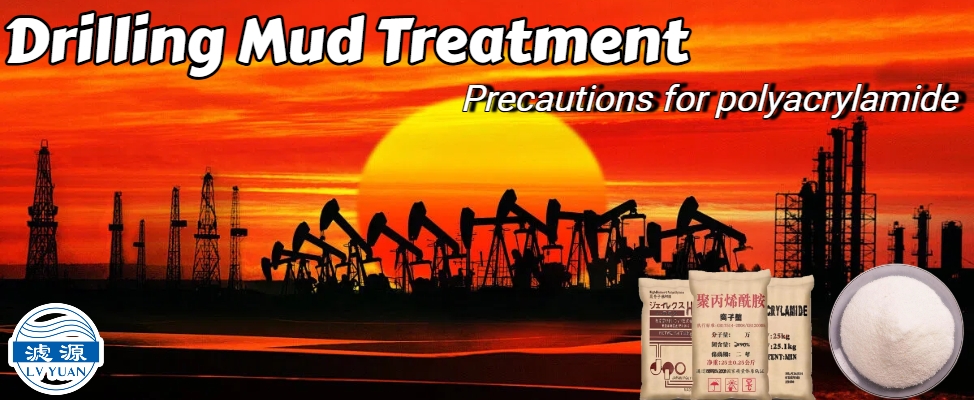
Polyacrylamide serves as a filtration reducer, thickener, stabilizer, lubricant, and flocculant. Field data shows:
● At well depths below 3000 m, using 0.1%–0.25% PAM can reduce fluid loss by 35–50%.
● In high-temperature and high-pressure (HTHP) wells, temperature-resistant PAM improves wellbore stability by 40% or more.
● Proper dosage increases mud viscosity by 25–30%, enhancing cuttings transport.
● Friction coefficient decreases by 20–25%, extending drill bit life.
● Solid-liquid separation efficiency improves by 30–45%, enhancing mud circulation.
These figures demonstrate that PAM is a critical additive for efficient and stable drilling.
Solution preparation: Dissolve PAM in clean water at 0.1%–0.3% concentration.
Mixing speed: Keep below 300 rpm to avoid molecular degradation.
Gradual addition: Add slowly into the circulating mud system.
Model selection:
⚪Anionic PAM for clay-rich or high-salinity muds.
⚪Cationic PAM for oil-bearing or negatively charged systems.
Recommended dosage: 0.05%–0.3% depending on formation and mud composition.
Proper application can increase cuttings carrying efficiency by over 30% and reduce mud clogging issues.
| Problem | Cause | Solution | Improvement Result |
|---|---|---|---|
| Weak flocculation | Incomplete dissolution | Stir longer, reduce speed | Flocculation +28% |
| Excessive viscosity | Overdose or wrong PAM type | Reduce dosage | Fluidity +35% |
| Filtration issues | Too high molecular weight | Use medium MW PAM | Filtration +40% |
| Slow sedimentation | Low temp or pH imbalance | Adjust to pH 6–8, heat to 30°C | Sedimentation time −25% |
Avoid mixing with strong acids/alkalis: Prevents molecular damage and 15% filtration loss increase.
⭕Use clean water: Impurities delay dissolution by 20–30%.
⭕Correct dosing order: PAM should enter the system before other additives.
⭕Proper storage: Moisture exposure can extend dissolution time by up to 50%.
⭕Re-stir before reuse: Ensures even flocculation performance.
Field results show that following these best practices improves drilling mud stability by around 38% and makes the return flow pressure more consistent.
Polyacrylamide is a vital chemical for modern drilling mud systems. When applied correctly, it reduces filtration, stabilizes the wellbore, and improves operational efficiency.
As a leading Chinese water treatment material manufacturer, we continue to support global oilfield clients with high-quality PAM products and tailored technical guidance.
Q1: What type of PAM should I choose for drilling?
A1: Anionic PAM for clay or saline mud; cationic PAM for oil-based or contaminated mud.
Q2: What happens if PAM dosage is too high?
A2: Excessive viscosity may occur, reducing flow and causing pump blockage.
Q3: How to dissolve PAM faster in winter?
A3: Heat water to 30°C and extend stirring to 30 minutes.
Q4: Is PAM environmentally safe for oilfield use?
A4: Yes, within recommended dosage ranges, PAM is non-toxic and eco-friendly.
1.What is the molecular weight of PAM?

Please contact us for free quotation by form below. We promise the quickest response within 24 hours: