
English

Home > Our News > Product Information > Calcium Chloride for Road Snow and Ice Removal
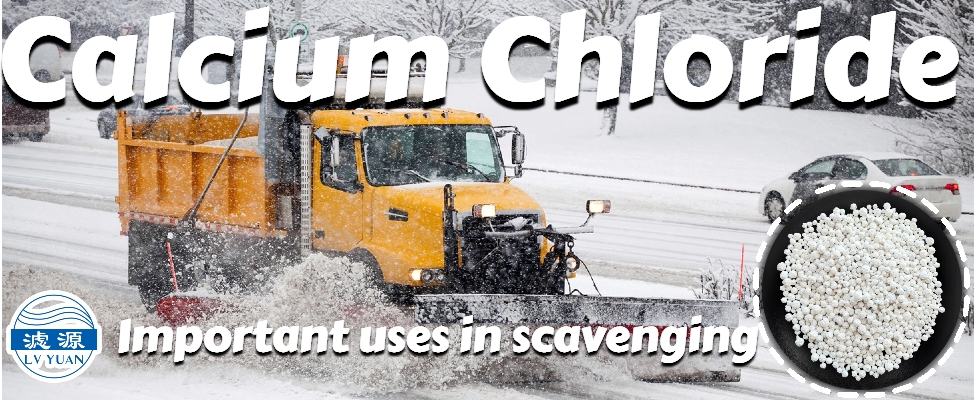
Winter snow and ice pose significant challenges to road safety. As a leading water treatment materials manufacturer, we’ve seen calcium chloride become one of the most effective de-icing agents for clearing roads, highways, and public spaces.
| Material | Main Ingredient | Lowest Effective Temp | Pros | Cons |
|---|---|---|---|---|
| Rock Salt (NaCl) | Sodium chloride | -7°C | Cheap, easily available | Slow in low temps, corrosive |
| Calcium Chloride (CaCl₂) | Industrial-grade calcium chloride | -25°C | Fast action, highly effective | Slightly higher cost, hygroscopic |
| Magnesium Chloride (MgCl₂) | Magnesium chloride | -12°C | Mildly eco-friendly | Limited performance in colder temps |
| Urea | CO(NH₂)₂ | -5°C | Safe for plants | Expensive, not strong for de-icing |
✅ Performs in Extreme Cold: Works effectively down to -25°C, unlike rock salt or urea.
✅ Fast Melting: Rapidly breaks down ice and snow with a smaller dosage.
✅ Less Corrosion: Causes less damage to concrete, asphalt, and vehicles.
✅ Prevents Re-Freezing: Its hygroscopic nature keeps surfaces ice-free longer.
We recommend considering the following when selecting calcium chloride as a de-icing agent:
✅Purity – Choose ≥74% industrial grade or ≥94% flake form
✅Particle size – Flakes for large areas, powder for deeper traction
✅Packaging – 25kg/50kg woven bags with an inner liner, or jumbo bags for bulk use
Due to its high moisture absorption rate, calcium chloride requires proper storage:
1.Store in a dry, ventilated warehouse
2.Keep bags fully sealed to prevent moisture intake
3.Avoid stacking too high to prevent bag damage
4.Store away from acids, water, and heat sources
✅ Highway and city road de-icing
✅ Parking lots and commercial spaces
✅ Airport runways and logistics routes
✅ Residential areas and walkways
Q1: Is calcium chloride corrosive?
A1: It is less corrosive than rock salt and safe for most roads and vehicles when used properly.
Q2: Can calcium chloride be mixed with other materials?
A2: Yes, it can be mixed with sodium chloride or urea for cost-saving or performance boost.
Q3: Is calcium chloride harmful to plants or soil?
A3: Its environmental impact is significantly lower than rock salt, but controlled use is advised.
Q4: Do you support bulk orders or samples?
A4: Yes, we support bulk orders starting from 1 ton and provide samples for quality testing.

Please contact us for free quotation by form below. We promise the quickest response within 24 hours: