
English

Home > Our News > Product Information > Activated carbon adsorption principle
As a water treatment material manufacturer with 28 years of experience, we often receive questions from customers such as: How does activated carbon adsorb pollutants? What is the difference in adsorption capacity among different types of activated carbon? Why does adsorption performance drop sometimes?
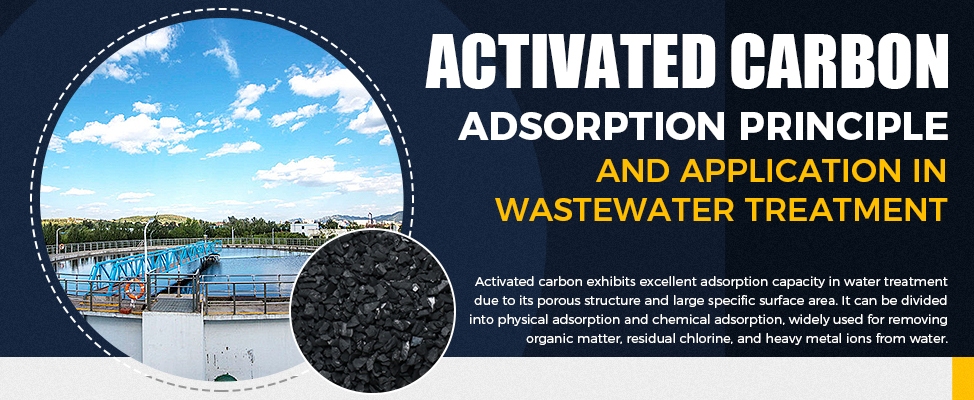
Activated carbon works through physical adsorption + chemical adsorption.
1. Physical adsorption
Our activated carbon contains micro-pores with a surface area of 800–1500 m²/g. These pores act like a sponge, capturing organics, chlorine, odor, and color.
2. Chemical adsorption
Surface functional groups (carboxyl, hydroxyl, etc.) create chemical bonds with certain pollutants, enabling deeper purification.
| Type | Iodine Value (mg/g) | Features | Recommended Use |
|---|---|---|---|
| Pellet Activated Carbon | 800–1000 | High strength, low dust, strong gas adsorption | VOC removal, industrial gas |
| Coconut Shell Carbon | 1000–1200 | Highest micro-pore ratio, fast adsorption | Drinking water, RO protection |
| Honeycomb Carbon | 600–900 | Low airflow resistance | Exhaust gas, air purification |
| Nut Shell Carbon | 900–1050 | Large surface area, cost-effective | Food industry, municipal sewage |
● Drinking water-Coconut shell activated carbon
● Food & beverage wastewater-Nut shell activated carbon
● Chemical & industrial wastewater-Coconut shell + nut shell carbon
● VOC & industrial exhaust gas-Pellet carbon
● Large airflow systems-Honeycomb carbon
● Micro-pores blocked by oil or organics
● Adsorption saturation
● Excessive COD loading
● Insufficient backwashing
● Higher COD in effluent
● Color or odor reappears
● Chlorine increases
● Shorter filtration cycles
● Perform regular backwashing
● Choose higher iodine value activated carbon
● Regenerate saturated carbon
● Combine with PAC & PAM for better pretreatment
Q1. What can activated carbon remove?
A1 : Chlorine, COD, odor, organics, VOCs, and color.
Q2. How often should activated carbon be replaced?
A2 : Every 3–12 months, depending on water quality.
Q3. Can saturated carbon be reused?
A3 : Yes, through thermal regeneration.
Q4. Is higher iodine value always better?
A4 : Higher iodine means more micro-pores, but selection should match the application.
Q5. Can activated carbon be used together with coagulants?
A5 : Yes, and the removal performance is usually much better.

Please contact us for free quotation by form below. We promise the quickest response within 24 hours: