
English

Home > Our News > Product Information > How Does PAC Influence Sludge Settling?
As a leading Chinese manufacturer of water treatment chemicals, we supply high-quality Polyaluminum Chloride (PAC) worldwide. In sludge settling, PAC significantly improves solid-liquid separation and effluent quality.
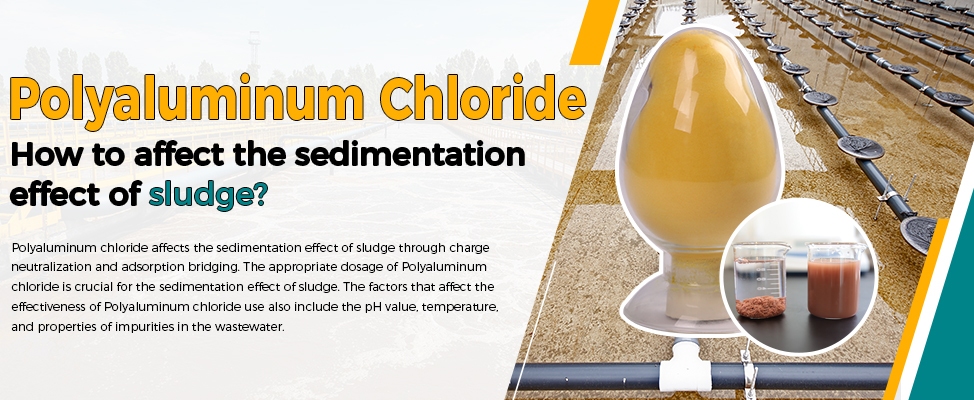
1) Charge Neutralization
● PAC hydrolyzes to form cationic polymeric ions
● Neutralizes negative charges on sludge colloids
● Reduces electrostatic repulsion
2) Adsorption Bridging
● PAC active sites adsorb multiple sludge particles
● Forms a “particle-PAC-particle” network
● Increases floc size and density
3) Sweep Flocculation
● PAC forms aluminum hydroxide precipitate networks
● Captures fine suspended solids
● Effective for micron-sized particles
| Factor | Optimal Range | Mechanism |
|---|---|---|
| PAC Dosage | 50–200 mg/L | Overdose causes re-stabilization |
| pH Value | 6.5–7.5 | Influences PAC hydrolysis forms |
| Mixing | Fast 150 rpm → Slow 40 rpm | Ensures uniform dispersion |
| Sludge Characteristics | Adjust via Zeta potential | Different sludge requires different PAC |
| Temperature | 15–30℃ | Affects reaction kinetics |
1. Determine optimal dosage via jar tests and floc observation
2. Select appropriate PAC type: high-basicity (70–80%) for organic sludge, low-basicity (40–50%) for inorganic
3. Optimize dosing points: post-primary sedimentation, multi-point dosing, fast then slow mixing
4. Combine with other chemicals: PAC + cationic PAM, PAC + lime, PAC + activated carbon
● Small, loose flocs → Increase dosage or adjust pH 6.5–7.5
● Turbid supernatant → Optimize mixing, extend settling time
● Sludge bulking → Switch to high-basicity PAC or add oxidant
● Basicity: 65–75% recommended
● Settling speed: 10–15 minutes
● Residual aluminum: <0.2 mg/L for drinking water
● Complete solubility without residue
For more information or assistance in selecting PAC, contact us for free testing and technical support.
Q1: Which sludge types are suitable for PAC?
A1: Organic, inorganic, or mixed sludge; choose PAC basicity based on water quality.
Q2: What is the benefit of PAC + PAM?
A2: PAC initiates flocculation; PAM strengthens flocs for better dewatering.
Q3: How to determine PAC dosage?
A3: Through jar tests and sludge zeta potential measurements.
Q4: PAC residual aluminum limit in drinking water?
A4: <0.2 mg/L to ensure safe water quality.

Please contact us for free quotation by form below. We promise the quickest response within 24 hours: